Definition — On StableStock, you fund your account with stablecoins, place an order to buy a real stock or ETF, and receive genuine equity ownership held in custody on your behalf. The stablecoins handle funding and settlement; the shares you hold are real — not synthetic or tokenized.
What actually happens when you place a trade?
A trade looks like a single tap, but several things happen behind it. Understanding the flow makes order statuses, settlement times, and your rights as a shareholder much easier to read.
At a high level, every trade moves through five stages.
How does funding with stablecoins work?
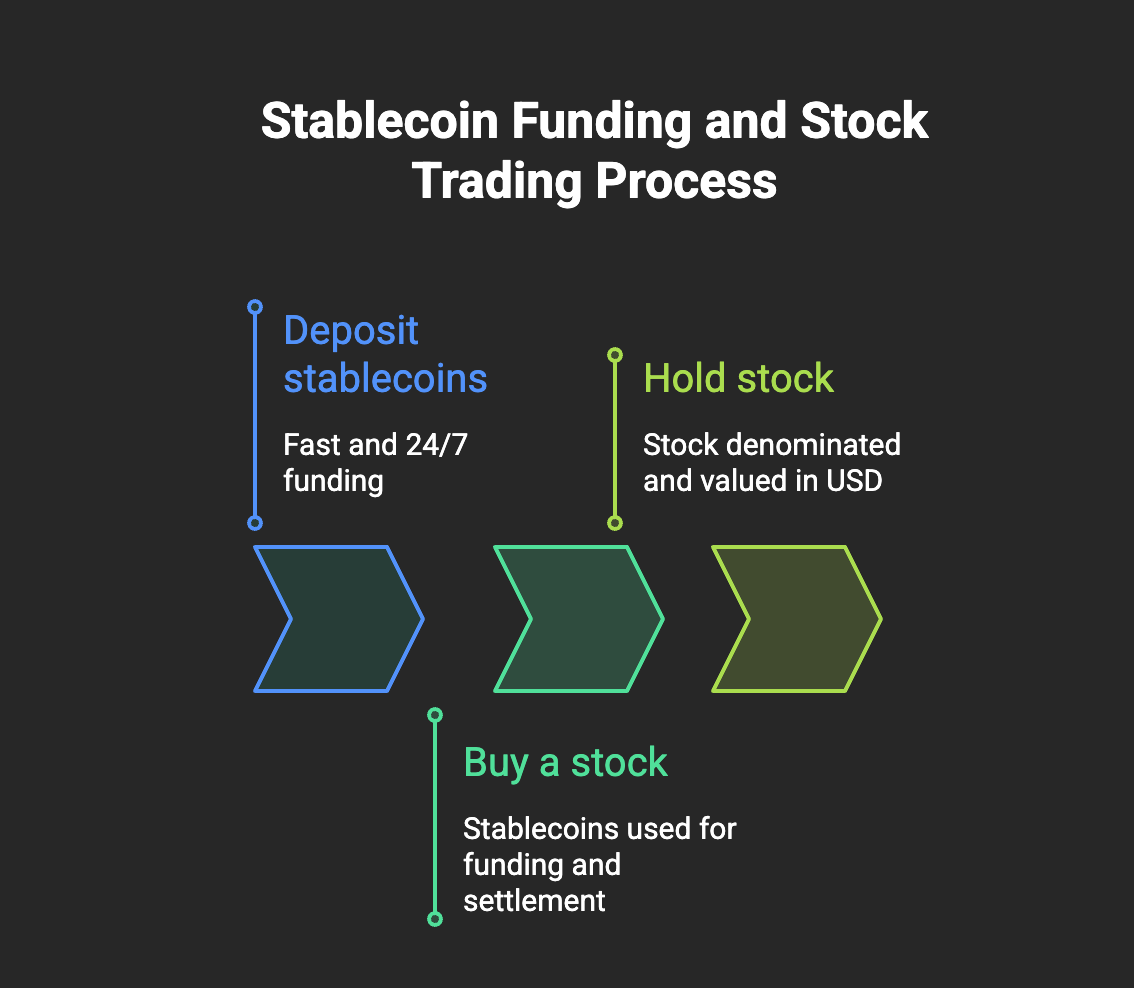
Instead of wiring fiat through a bank, you fund your account by depositing stablecoins. Because stablecoins settle on a blockchain, deposits are typically fast and available around the clock — without the cut-off times and cross-border friction of traditional transfers.
When you buy a stock, the stablecoins are used on your side for funding and settlement. What you end up holding is the stock itself, denominated and valued in U.S. dollars, not a stablecoin balance pretending to be a share.
How is an order executed?
Once you confirm an order, it is routed to the relevant market — U.S. or Hong Kong — where it is matched against available buyers and sellers. Two things determine what happens next:
Your order type — A market order fills quickly at the best available price; a limit order fills only at your price or better.
Market conditions — Liquidity, the bid-ask spread, and price movement all affect the exact fill you get.
After your order fills, its status updates so you can see exactly what happened — filled, partially filled, or still working.
What is settlement, and why isn't it instant?
Execution is the moment your trade is matched. Settlement is when ownership of the shares is formally transferred and recorded. These are two different steps, and settlement takes a short, standardized amount of time depending on the market.
Market | Standard settlement | What it means |
|---|---|---|
U.S. stocks | T+1 | Settles one business day after the trade |
Hong Kong stocks | T+2 | Settles two business days after the trade |
This is a market-wide standard, not a StableStock-specific delay. Your position and its value are reflected immediately after execution; settlement is the back-office finalization happening behind the scenes.
What do you actually own?
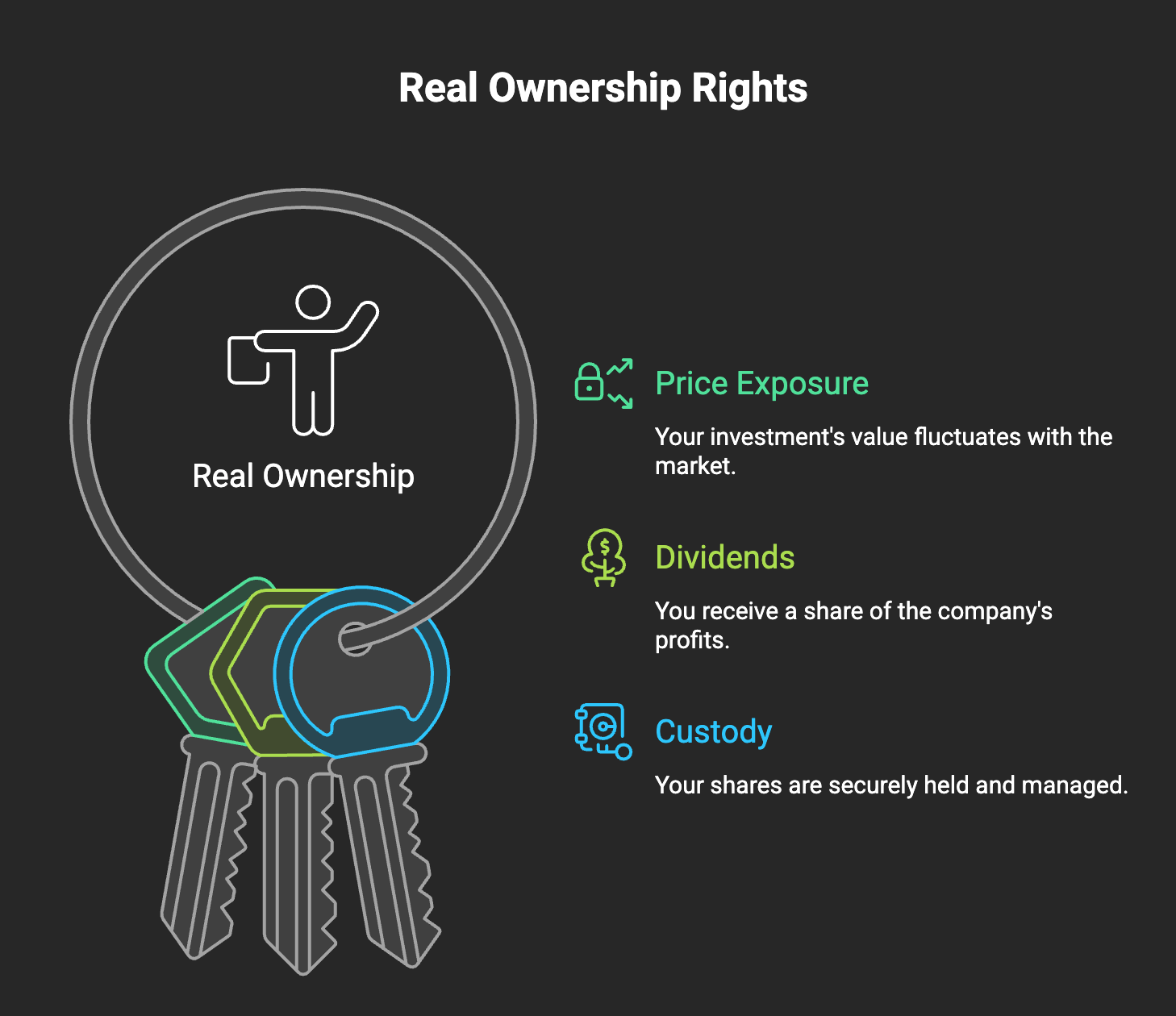
When your trade settles, you own real shares of the company or fund. That ownership comes with real economic rights:
Price exposure — Your position rises and falls with the stock's market price.
Dividends — If the company pays a dividend, you're entitled to it as a shareholder.
Custody — Your shares are held in custody on your behalf, separate from synthetic or tokenized products that only track a price.
This is the core difference between a stablecoin-funded brokerage and a tokenized-stock platform: the funding rail is digital, but the asset you hold is a genuine share.
On StableStock, stablecoins are the funding and settlement layer — the stocks and ETFs you hold are real equity, held in custody on your behalf. One account gives you access to both U.S. and Hong Kong markets.
Takeaway: A trade flows through funding, order, execution, settlement, and custody. Stablecoins move the money; real shares are what you hold. Knowing the difference between execution (when your trade is matched) and settlement (when ownership is finalized) explains almost every question new users have about timing.
Next steps
Market orders vs limit orders — Choose how your trade gets filled — speed or price.
Understanding your order status — Learn what "pending," "filled," and "rejected" actually mean.